Op-ed

The EU-China Summit: Rekindling Face-to-Face Talks

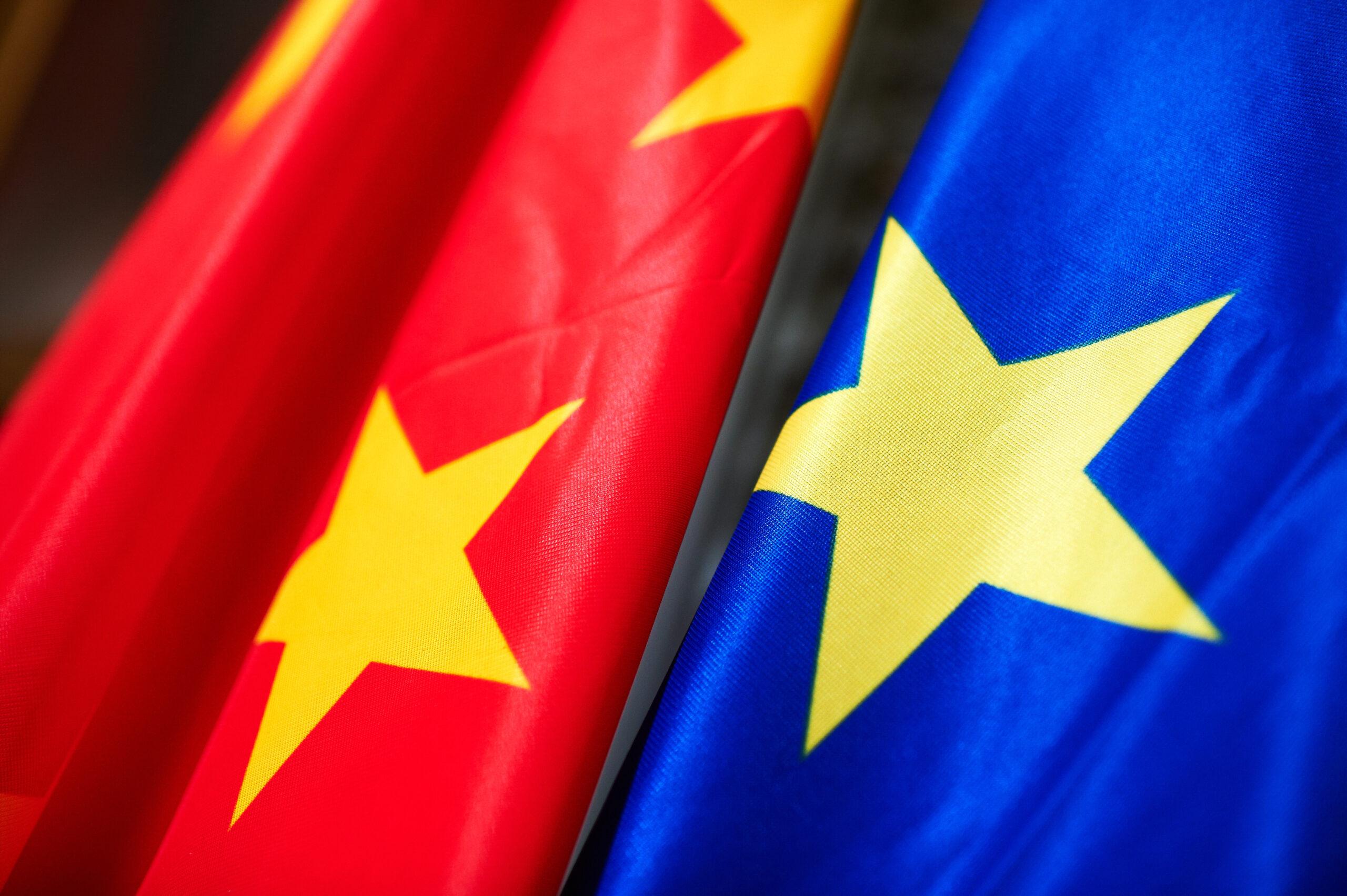
On 7 December 2023 the EU and China held their 24th Summit in Beijing. At their first in-person summit since 2019 European Council President Charles Michel and European Commission President Ursula von der Leyen, accompanied by EU High Representative for Foreign Affairs and Security Policy Josep Borrell met with Chinese President Xi Jinping and Premier Li Qiang in two separate sessions. Anticipations for the summit’s outcome remained modest due to prevailing challenges in EU-China relations. Despite the low expectations and the lack of a joint statement in conclusion, the summit offered a forum for EU and Chinese leaders to meet face-to-face, discuss topics of key importance and emphasise the need to uphold mutually beneficial relations.

Read More »

Forging the Future: The EU-South Korea Digital Partnership in the AI Era

The EU and the Republic of Korea signed a digital partnership in November 2022. Despite differing regulatory approaches to the evolving global AI market, a renewed AI partnership is emerging that aims to boost international market access, foster innovation, and establish a unified regulatory framework, benefiting both regions as well as global AI governance.

Read More »

The French – Mongolian Uranium Mining Deal: Boom or Bust?

Mongolia boasts an incredibly rich array of natural resources, from copper to coal, to rare earth metals. Although the country also contains rich and accessible uranium deposits, the mineral has not been mined in Mongolia since the 1990s, after the last Russian uranium mine closed. Though companies like the Canadian-owned Khan Resources have attempted to restart production since, none have managed yet to overcome the political, environmental and legal hurdles that inevitably arise when mining in Mongolia. In October 2023, the French nuclear company Orano signed a deal to mine uranium in Mongolia after concerns about France’s nuclear supply arose due to instability in western Africa, where it historically sourced most of its uranium. Many questions remain, as to whether the project will succeed unlike previously failed attempts to mine the element in the country, and as to how the mineral will leave Mongolia, which is landlocked and enveloped by China and Russia.

Read More »

Resumption of the EU-Thailand Free Trade Agreement: A Catalyst for Growth and Collaboration

In an era marked by profound and unprecedented geopolitical tensions, trade disputes, supply chain disruptions, and global economic downturn, the revival of negotiations for the Free Trade Agreement (FTA) between the European Union (EU) and Thailand signifies an opportunity to revitalise the economic relations between the two long-time trading partners. Leveraging the foundation laid by the EU-Thai Partnership and Cooperation Agreement (PCA) signed on 14 December 2022, both parties have affirmed their commitment towards upholding the rules-based international order. The PCA is the reflection of the EU’s strategic intent to address the increasing geopolitical risks, economic uncertainties, and the climate crisis by actively cultivating like-minded alliances in the Indo-Pacific region.

Read More »

Complexities and Visions of Outer-Space between the EU and Asia

More recent global competition has reignited outer space curiosity, as well as the use of it as an illustration of a country’s competency, capability, and focus. Those States able to reach outer space by their own means demonstrate their power due to the financial strain required. Pushing back the limits of human exploration and establishing such ‘firsts’ conveys prestige and notoriety. The most recent ‘first’ was achieved on 23 August 2023. That day, the Chandayaar-3 mission led to an Indian lander known as Vikram touching down on the Lunar South Pole. There it dispatched its rover, Pragyan. This mission made India the fourth State to land an unmanned probe on the Moon after the US, Russia, and China. Moreover, it made it the first State to reach the lunar south pole.

Read More »

Unveiling the EU’s Global Gateway Strategy: Expanding Indo-Pacific Infrastructure Landscapes

On 25-26 October 2023 the EU held its first Global Gateway Forum in Brussels, gathering government and other representatives from the European Union and its partner countries around the world, including from the private sector, civil society, financial institutions, experts and international organisations. The Forum was attended by representatives from more than 20 partner countries, including 40 leaders and ministers. With pressing issues relating to global investment in infrastructure on the agenda, the Forum saw the EU sign financial agreements on clean energy with different partners, including Asian countries such as Vietnam, Bangladesh and the Philippines, consolidating its EU Strategy for Cooperation in the Indo-Pacific. Highlighted as a promising beginning, critics have wondered whether the EU can gather the required internal support to obtain concrete results on the ground and attract the right investments.

Read More »

To BRI or not to BRI: Examining European Implications of Nepal and China’s Different Perspectives on BRI Projects

In 2013 China launched its Belt and Road Initiative (BRI), which seeks to increase globalisation and connectivity primarily through infrastructure projects. Through these projects, China aims to make economic gains as well as support the host country’s infrastructure, as many of the 150 signatories on the initiative are Least Developed Countries (LDCs), and to close the global infrastructure gap.

Read More »

The BRICS Expansion: Perspectives for the EU

When Lord Jim O’Neill, a former Goldman Sachs economist, coined the acronym “BRIC” in 2001 to describe the economic potential of Brazil, Russia, India, and China, he hardly foresaw that a formal BRICS political grouping, including South Africa, would emerge. Fast forward to the 2023 BRICS Summit, the group is now expanding. The Johannesburg II declaration, issued on 23 August 2023, offers a formal invitation to the Argentine Republic, the Arab Republic of Egypt, the Federal Democratic Republic of Ethiopia, the Islamic Republic of Iran, the Kingdom of Saudi Arabia and the United Arab Emirates to become full members of BRICS from 1 January 2024 onwards. The expansion came as a surprise to many and left some wondering where BRICS is heading, as well as what the expansion will mean for other actors such as the EU.

Read More »

EU-Sri Lanka Relations: From Cooperation to Partnership

On 13 July 2022, after months of heavy protests, protestors stormed the Sri Lankan presidential palace. In what followed, then president Gotabaya Rajapaksa fled and resigned, being promptly replaced by his prime minister, Ranil Wickremesinghe, through a Parliamentary vote. Since the turnover the economic and political situation within Sri Lanka remains delicate. As the island has increasingly become a centre of Sino-Indian rivalries, how can the EU assist its economic and political development and help address the crisis, in order to stabilise the country and avoid it becoming a flashpoint of competing interests.

Read More »