Indo-Pacific

The EU’s Global Gateway in the Pacific: a pragmatic opening for reorienting European cable security

Submarine-cable security has arrived on the European agenda as a sabotage problem, and the European Union has answered it well: a comprehensive Cable Security Toolbox built on operational resilience rather than perfect protection. Read against the empirical record, however, the threat lies elsewhere. Cable damage is overwhelmingly accidental and, in Europe, declining; what climate change alters is not why cables fail but how badly a failure ends. That acute risk concentrates in the Pacific Island Countries, where the cable is second-order infrastructure with first-order consequences: often a nation’s only link, with repair capacity an ocean away and failures that escape the legal and disaster-risk architectures meant to record them. The Toolbox already points the right way. What it invites is not a new instrument but a change of orientation: carrying proven repair, detection and reporting know-how outward, in coordination with partners and on Pacific terms.

Read More »

Navigating Great-Power Rivalry: An Indo-Pacific Plus Strategy for the European Union

As transatlantic tensions deepen, the European Union faces a geopolitical environment increasingly shaped by great-power rivalry rather than stable multilateralism. At Davos 2026, Canadian Prime Minister Mark Carney warned that the rules-based order is weakening and that middle powers must respond through cooperational coalition-building rather than passive reliance on inherited institutions. Canada’s subsequent strategic tariff arrangement with China and the United Kingdom’s pragmatic reset with Beijing illustrate a broader trend of strategic hedging under US assertiveness. For the EU, the central question is whether to react with its own unilateral pivot, or to actively implement a coordinated Indo-Pacific coalition strategy that preserves resilience and strategic autonomy without drifting into dependency on either Washington or Beijing.

Read More »

A Call for Action: Meditations on the EU’s Indo-Pacific Strategy in light of the 4th Indo-Pacific Ministerial Forum and AOIP 2025

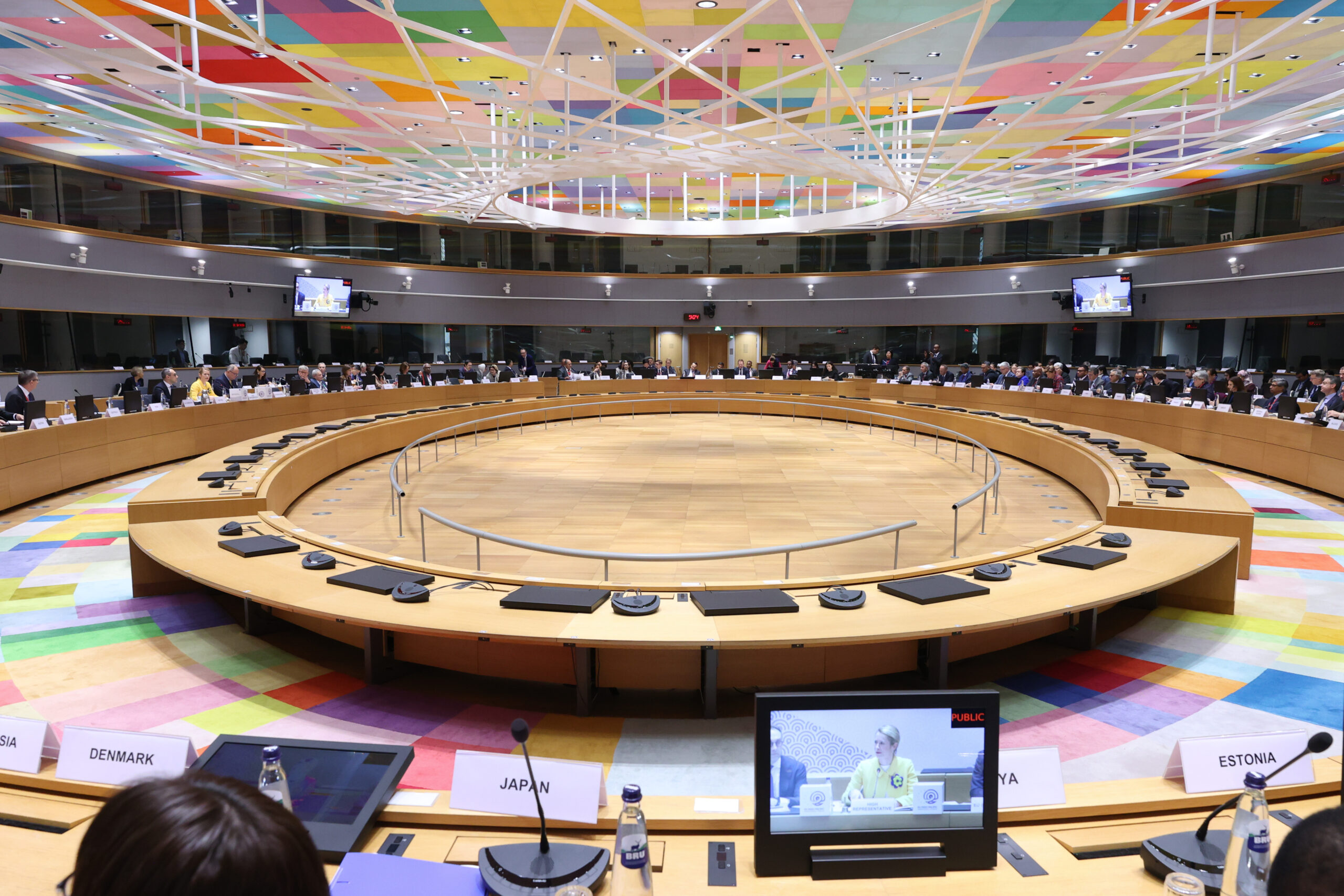
As the EU’s 4th Indo-Pacific Ministerial Forum (IPMF) took place in Brussels on the 20th and 21st of November 2025, the European Union faces a pivotal moment. Despite grand declarations, Brussels’ impact in the region remains constrained by episodic engagement and an overreliance on formal diplomatic channels, notwithstanding efforts to engage with civil society and other relevant stakeholders. How can the EU explore potential alternative channels of diplomacy to establish lasting, practical, and realistic partnerships with its Indo-Pacific partners? By leveraging European expertise as a result of private-sector champions, while simultaneously working together on developing capacity-building initiatives on the ground, the EU may transform its strategy from rhetoric into tangible action and show its partners it is serious about its commitments.

Read More »

Kishida’s Resignation and the October 2024 General Elections – A Turning Point in Japanese Politics?

With the announcement of Fumio Kishida’s leadership coming to an end after his resignation in August 2024, a sense of shifting political powers emerged in Japan. Kishida served as Japan’s Prime Minister (PM) between 2021 and 2024, leading the ruling Liberal Democratic Party (LDP). The end of the Kishida administration aimed to bring a fresh start for Japan, leaving room for his successor Shigeru Ishiba to be appointed LDP leader, becoming the new PM on 1 October 2024. Soon after coming into office he called for a snap general election, which was held on 27 October 2024. With the result of the election leading to a political impasse and looming uncertainty, what can be expected of Japan’s political developments and the future of EU-Japan relations?

Read More »