FTA

How The EU Can Leverage The Current FTA Negotiations To Secure A Mutually Beneficial CRM Partnership With India

As the EU is set to accelerate on its path toward climate neutrality, technological sovereignty and independence, the European Union’s access to Critical Raw Materials (CRM) poses a pressing structural priority, with CRMs playing fundamental roles in the manufacturing of semiconductors, solar panels, wind turbines, and other essential components of the emergent green and digital economy. Despite this apparent strategic importance, the EU relies on a dangerously bottlenecked import base. With China producing 86% of the world’s rare earth minerals, the EU imports 100% of its supply of heavy rare earth elements (REE) from China. Such a dependency transforms CRMs from merely a supply chain concern into a genuine geopolitical challenge. This policy brief argues that CRM integration into the EU-India FTA would be a strategic necessity for the security of Europe’s industrial future.

Read More »

CEPA and the EU’s Indo-Pacific Test: Can Strategic Pragmatism Meet Sustainability?

After nearly a decade of negotiations, the European Union and Indonesia have concluded their Comprehensive Economic Partnership Agreement (CEPA), a landmark deal linking Europe’s de-risking ambitions with Southeast Asia’s development priorities. As the agreement enters the complex EU ratification process, questions arise over whether Brussels can strike a balance between environmental integrity and strategic pragmatism. Palm oil, nickel, and sustainability compliance will test both partners’ political will and the EU’s ability to act as a credible, values-driven actor in the Indo-Pacific.

Read More »

Forging Ahead: Restoring EU-Philippines FTA Negotiations

In the complex geopolitical context shaping international dynamics — characterised by a plethora of (in)security dynamics, encompassing shifting alliances and global tensions — the significance of a solid partnership based on economic resilience and an increase of sustainable development has never been more relevant.

Read More »

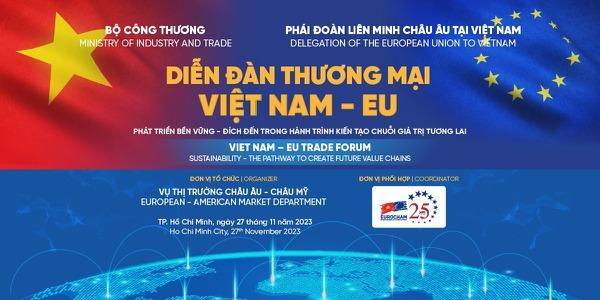
Viet Nam – EU Trade Forum 2023

The European Institute for Asian Studies contributed to the 2023 Viet Nam – EU Trade Forum with an online presentation by EIAS Director Ms Lin Goethals on “Accompanying the manufacturing industry under pressure of green & sustainable development”. The Forum took place in Ho Chi Minh City on 27 November 2023.

Read More »

Resumption of the EU-Thailand Free Trade Agreement: A Catalyst for Growth and Collaboration

In an era marked by profound and unprecedented geopolitical tensions, trade disputes, supply chain disruptions, and global economic downturn, the revival of negotiations for the Free Trade Agreement (FTA) between the European Union (EU) and Thailand signifies an opportunity to revitalise the economic relations between the two long-time trading partners. Leveraging the foundation laid by the EU-Thai Partnership and Cooperation Agreement (PCA) signed on 14 December 2022, both parties have affirmed their commitment towards upholding the rules-based international order. The PCA is the reflection of the EU’s strategic intent to address the increasing geopolitical risks, economic uncertainties, and the climate crisis by actively cultivating like-minded alliances in the Indo-Pacific region.
Read More »

Framing the Future EU-Viet Nam Partnership – Green Development as a Catalyst for Trade and Political Cooperation?

Two years after the entry into force of the Free Trade Agreement (FTA) between Vietnam and the European Union (EU), this EIAS Briefing Paper outlines the evolution of economic and trade relations between the two partners, identifying relevant sectors for future cooperation. Taking into account both parties’ climate ambitions, as well as Vietnam’s need to develop its energy infrastructure, the EU and Vietnam should collaborate more intensively to secure and incentivise sustainable European investments in Vietnam, facilitated by the FTA. Sharing its experience, the EU can contribute to determining an energy policy adapted to Vietnam’s needs and will.

Read More »