
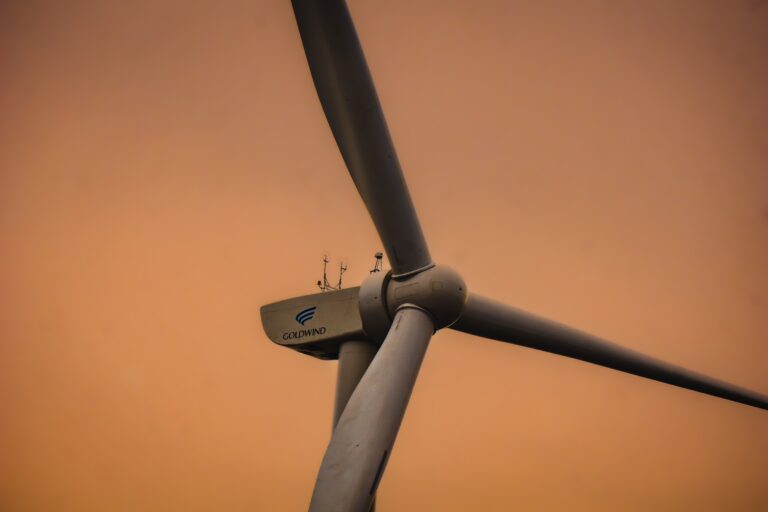
Long considered a European success story, the wind industry has recently become emblematic of the EU’s competitiveness challenges. Despite pioneering the production of wind turbines, European original equipment manufacturers (OEMs) have slowly ceded their global dominant position to foreign competitors. Of 169 gigawatts (GW) of new wind capacity installed worldwide in 2025, 119 came from China (70.41%), with Chinese OEMs capturing eight spots among the top ten global wind turbine makers. This prosperity was not unforeseeable; during the 2010s, China was quietly building one of the most accessible and heavily incentivised wind markets in the world while European policymakers were still debating the merits of wind energy. Ultimately, this allowed Beijing to surpass the EU in turbine installations for the first time in 2015, quickly raising concerns on the competitiveness of European manufacturers in the renewable energies sector.
Author: Giacomo Arosio, EIAS Junior Researcher
Photo Credits: Pixabay