
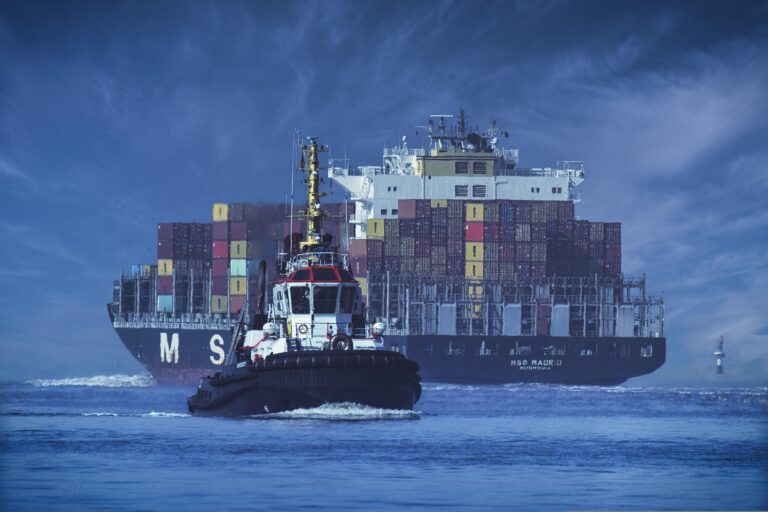
Beyond Market Access: Protecting EU Commercial Interests In The Malacca-Singapore Maritime System.

The EU’s expanding trade agenda and investment relationships with Singapore, Malaysia and Indonesia depend not only on preferential market access, but also on the operational reliability of the Malacca and Singapore Straits’ maritime systems. Disruptions affecting ports, shipping and digital infrastructure can undermine commercial flows even when sea lanes remain legally open. Port cybersecurity, high-risk ship-to-ship (STS) transfers, and delays in submarine-cable repair illustrate how operational weaknesses can translate into higher costs, uncertainty and disruption for European-linked trade. EU trade agreements can improve regulatory predictability and digital-trade conditions, but they cannot address these risks on their own. They should be complemented by targeted cooperation on maritime resilience, information-sharing and implementation with the littoral states, building on existing regional mechanisms rather than duplicating them.


1. The Strategic Importance of Maritime Resilience

As Mr. Jeffrey Siow, the Singaporean Minister for Transport, stated during the 17th Co-operation Forum convened by Indonesia, Malaysia and Singapore on 25-26 August 2026, recent crises in the Red Sea and the Strait of Hormuz have highlighted the vulnerability of key maritime chokepoints and their importance to economic security. It is essential to note that disruptions can occur aside from military blockade, as the operability and functionality of straits depend on many operational and technical factors. This is particularly true for the Straits of Malacca and Singapore (SOMS), forming one of the world’s busiest sea lanes, managed by three different littoral states. 

Author: Alice Consigliere, EIAS Junior Researcher

Photo credits: Pixabay